Our City
History of McLean
From open range and a railroad switch to the Mother Road and beyond: the story of McLean, Texas.
Before the town: the High Plains
For thousands of years the land that is now Gray County was shortgrass prairie crossed by seasonal creeks, part of the vast Llano Estacado and Panhandle plains. Comanche, Kiowa and earlier peoples followed bison herds across the region. After the southern plains tribes were removed to reservations in the 1870s, ranchers and cattle companies moved quickly onto the open grassland.
Large ranches defined the early Panhandle. Among them were English-born ranchers who brought capital and cattle from abroad, and the great ranches that stretched across several counties. In the 1880s and 1890s, barbed wire arrived and changed everything: fence lines divided the open range, ended the era of the long cattle drive, and shaped the settlement pattern still visible in the grid of county roads today. That history is told at the Devil's Rope Museum, which takes its name from a nickname ranchers gave to barbed wire.
1901: A town is born on the railroad
McLean owes its existence to the railroad. In 1901 the Choctaw, Oklahoma & Texas Railroad, later part of the Chicago, Rock Island & Pacific system, built across the Panhandle. A switch and section house on the line gave the community its start, and the new station became a place where ranchers could ship cattle and buy supplies. The town was named for William Pinkney McLean, a Texas legislator and railroad commissioner.
Stores, a school, churches and a post office followed the tracks. Settlers broke the prairie for wheat and other crops, and ranching continued to anchor the local economy. In 1909 McLean was incorporated as a city, putting local government on a firm footing, with an elected mayor and council responsible for streets, water, and public safety.
The 1920s: oil, automobiles, and a new road
The 1920s changed the Panhandle. Oil and natural gas were developed in neighboring fields, and the region saw new families, new payrolls and new demand for goods and services. At the same time, the automobile was transforming how Americans traveled. Roads that had been muddy wagon tracks were being surveyed, graded and graveled as part of a new national highway system.
On November 11, 1926, a new numbered highway was officially commissioned: U.S. Route 66, running from Chicago to Santa Monica, California. By 1927 the route was carrying travelers through McLean, along what is now First Street. The town that had been built for the railroad now had a second lifeline.
The Route 66 years
Route 66 brought customers to every kind of business a traveler needs. McLean filled with gas stations, garages, motels and tourist courts, cafes and grocery stores. Families heading west during the Dust Bowl years, soldiers traveling during World War II, and postwar vacationers in station wagons all passed through. The route earned its nicknames: the Main Street of America and the Mother Road.
In 1929 the Phillips Petroleum Company built a Tudor-influenced, cottage-style service station on the road. With its steep red shingled roof, brick chimney and arched door, the building was designed to look like a welcoming home rather than an industrial facility, a style used to make gas stations more inviting to travelers and to neighbors. The building survives today as one of the signature landmarks of the town. You can read more on the Phillips 66 Station page.
World War II: Camp McLean
During World War II, the federal government established an internment and prisoner of war camp near McLean. Camp McLean held prisoners from 1942 to 1945, and the camp and its guards became part of the town's wartime story. When the war ended the camp was closed and its buildings were removed or repurposed, but the episode remains part of local memory and of the larger history of the Panhandle during the war years.
Postwar decades: growth, and a changing road
After the war, American highway travel grew explosively. McLean's businesses served a steady stream of motorists, but the road itself was changing. Engineers widened and straightened the highway, and by the 1950s planners were working on the Interstate Highway System, which promised faster, limited-access travel between major cities.
Like many small towns, McLean began to see its population decline as farms consolidated and young people left for larger cities. The service stations and motels that had lined Route 66 began to close, one by one. The Phillips 66 station stopped operating as a working station in 1977.
1984: The bypass
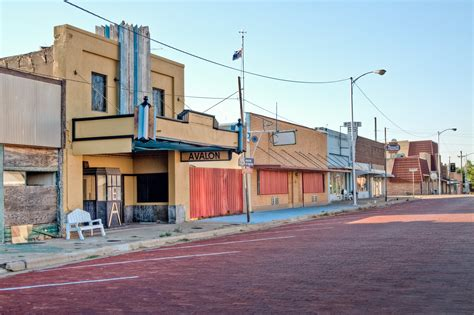
In 1984 Interstate 40 was completed around McLean. It was the last town on Route 66 in Texas to be bypassed by the interstate. Traffic that had once flowed down First Street now moved a short distance away at highway speed, and many businesses closed. Yet the bypass also helped preserve the old downtown, because it was not torn down or rebuilt for modern traffic. Its brick streets and storefronts remained largely as they were in the Route 66 era.
Preservation and revival
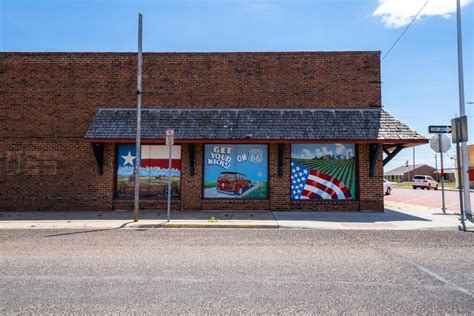
By the late 1980s, people in McLean and across the country realized that the old highway was a historic resource. In 1991 Delbert and Ruth Trew opened the Devil's Rope Museum in a former garment factory building at 100 Kingsley Street, with the Texas Route 66 Museum under the same roof. In the early 1990s the Old Route 66 Association of Texas restored the Phillips 66 station. Volunteers painted murals, repaired signs, and welcomed visitors from around the world.
In 2004 the McLean Commercial Historic District, which includes the Phillips 66 station and downtown storefronts, was listed on the National Register of Historic Places. Today the National Park Service's Route 66 program and heritage travelers regularly list McLean among the most evocative stops on the Texas segment of the road.
McLean today
McLean remains a small town in the best sense: a place where the City Council meets in public, where volunteers keep the museums open, and where residents turn out for school events and holidays. The city continues to maintain its streets, water and sewer systems, and public safety services while protecting the historic character that makes it special. In 2026, as the nation celebrates the 100th anniversary of Route 66, McLean is welcoming a new generation of travelers.
Timeline
1870s–80s
Cattle ranches spread across the Panhandle after the buffalo and the Comanche are removed from the region. Barbed wire begins to fence the open range.
1901
The Choctaw, Oklahoma & Texas Railroad builds across Gray County. A switch and section house on the line become the beginning of McLean.
1909
McLean is incorporated as a city.
1920s
Oil and gas development in the Panhandle brings new workers and business to the area. The automobile begins to reshape the town.
1927
U.S. Route 66 is routed through McLean along First Street. Service stations, cafes, and motels open to serve travelers.
1929
The cottage-style Phillips 66 station is built on Route 66.
1942–1945
Camp McLean, a World War II internment camp, holds prisoners of war near the town.
1977
The Phillips 66 station closes as a working service station.
1984
Interstate 40 bypasses McLean, the last Texas town on Route 66 to be bypassed.
1991
Delbert and Ruth Trew open the Devil's Rope Museum. The Texas Route 66 Museum is housed in the same building.
Early 1990s
The Old Route 66 Association of Texas restores the Phillips 66 station.
2004
The McLean Commercial Historic District is listed on the National Register of Historic Places.
2026
The nation marks the 100th anniversary of Route 66, commissioned November 11, 1926.